by Eric | 8 Jun 2017 | Top Stories, Recent Posts, Track Meet, Sports, 2017
The 2017 track meet came down to the last event this year, the 4×400 meter relay. Prior to the race Yorktown (Orange) had a 6 point lead. Manila Bay’s strong 4×400 performance earned them the narrow victory. Congrats to the men in green!
by Mitchell | 8 Jun 2017 | Legislative, Top Stories, 2017
The second session of the Legislature involved many heated debates in order to priorities the most pressing issues by each committee. Committee Chairmen were elected to head each of the five committees and the Committee Secretary was in charge of reading aloud each bill on the table and amending any necessary changes to the bill if the committee chose to do so. Each committee had the responsibility of prioritizing their top three bills to move on to General File, where debate will take place regarding all of the priority bills.

Senator Nick Koehler is deep in discussion with his Committee regarding a bill to enhance the state education platform.
The second session ended by moving in to General File and debating our first two bills. Our Legislative session has the privilege of having 2016 Boys Nation Vice President, Choteau Kammel, to assist in showing our current Boys Staters the proper way each bill will be debated. There were some very heated debates and opinions expressed in our first two, but ultimately both of those bills were turned down, and for the time being, tabled indefinitely.

Senator Peter Owens debates the Internet Sales Tax bill in which he authored.
Our Senators are very excited to spend an entire afternoon debating the rest of the priority bills in General File at this time!
by Eric | 8 Jun 2017 | Legislative, Top Stories, Recent Posts, 2017
Senators in the Cornhusker Boys’ State Unicameral are working hard to craft and debate legislation .


by Eric | 8 Jun 2017 | Top Stories, Band, Choir, Recent Posts, 2017
Lt. Governor Mike Foley was the keynote speaker at the Wednesday joint session of Boys’ and Girls State. Lt. Governor Foley addressed the students and answered their questions. Prior to the keynote address, the band and chorus performed for the 800 students in attendance. University of Nebraska coaches Amy Williams, Bob Diaco, and John Cook shared words of encouragement.


by James | 7 Jun 2017 | Newspaper, Featured Stories, 2017
By: Andrew Harrison
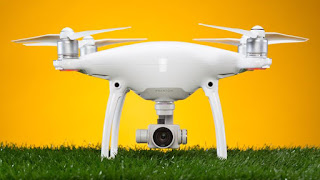
Unmanned air crafts, flying toys, or “Shotgun Practice.” Whatever you call them, drones are a very hot topic in the world today. Many governments across the globe are discussing and creating new laws to make the piloting safer and the public concerns resolved. Most governments simply state in their laws that the act of piloting drones is prohibited entirely and punishable by jail time and fines. However, the same cannot be said for the United States. There is a very complex history behind the laws and ideas about drones in the United States. A local expert of this complex history is Matthew Waite, a professor of the University of Nebraska Lincoln’s Drone Lab. Using comedy, demonstrations, and historical facts, Waite explained the history of drones and some of his personal experience with drones in relation to the laws of the United States. The legal history of drones began with the Romans and their property laws. The Romans believed that when a citizen owned property, it was assumed that he also owned the the sky and the heavens above his or her property. This belief began to change starting in 1783 in France. At this time, two brothers made the curious decision to fill a large cloth balloon with hot air, thus creating the first hot air balloon. With the new possibility of flying, lawyers of the time began to consider whether or not flying over someone’s property is indeed trespassing. The fascinating legal history of drones is only developed further with the Causby Chicken Farm in World War II. When a military bomber plane runway was developed near a chicken farm in North Carolina. The chickens of the family that lived on this farm grew so uneasy from the sounds of the bombers landing and taking off that they began to beat their heads against the walls of the chicken coop until death. With the loss of everything they had, the Causby family sued the United States government for intrusion of property. The verdict of this case was important in the legal history of drones because it determined a maximum height for personal property. It was said that all land owners should be able to plant a tree, and seeing that trees can grow up to 200 feet, it was determined that personal property elevates to 200 feet in the air. In the early
All of those build up the case on the piloting side but camera’s are also a problem. The first commercially available camera’s was created in the 1890’s. This freaked people out at the time and a Harvard student wrote “The Right to Privacy,” but the First Amendment solved this by protecting cameras as speech. Drones have all of the laws previously said and then some, Matthew has come across this in his coverage of the 2012 Nebraska Drought. He took an aerial photo and the FAA (Federal Aviation Administration), created in 1954, sent a cease and desist letter to him. Matthew decided to play ball with the administration but this cost him much head ache. Waite spent hundreds of dollars and many hours trying to appeal to the FAA. Even now it is very hard to appeal the broken system in place to keep drone operators and the general public happy. Either way, drones are the future